 AyRoo
AyRoo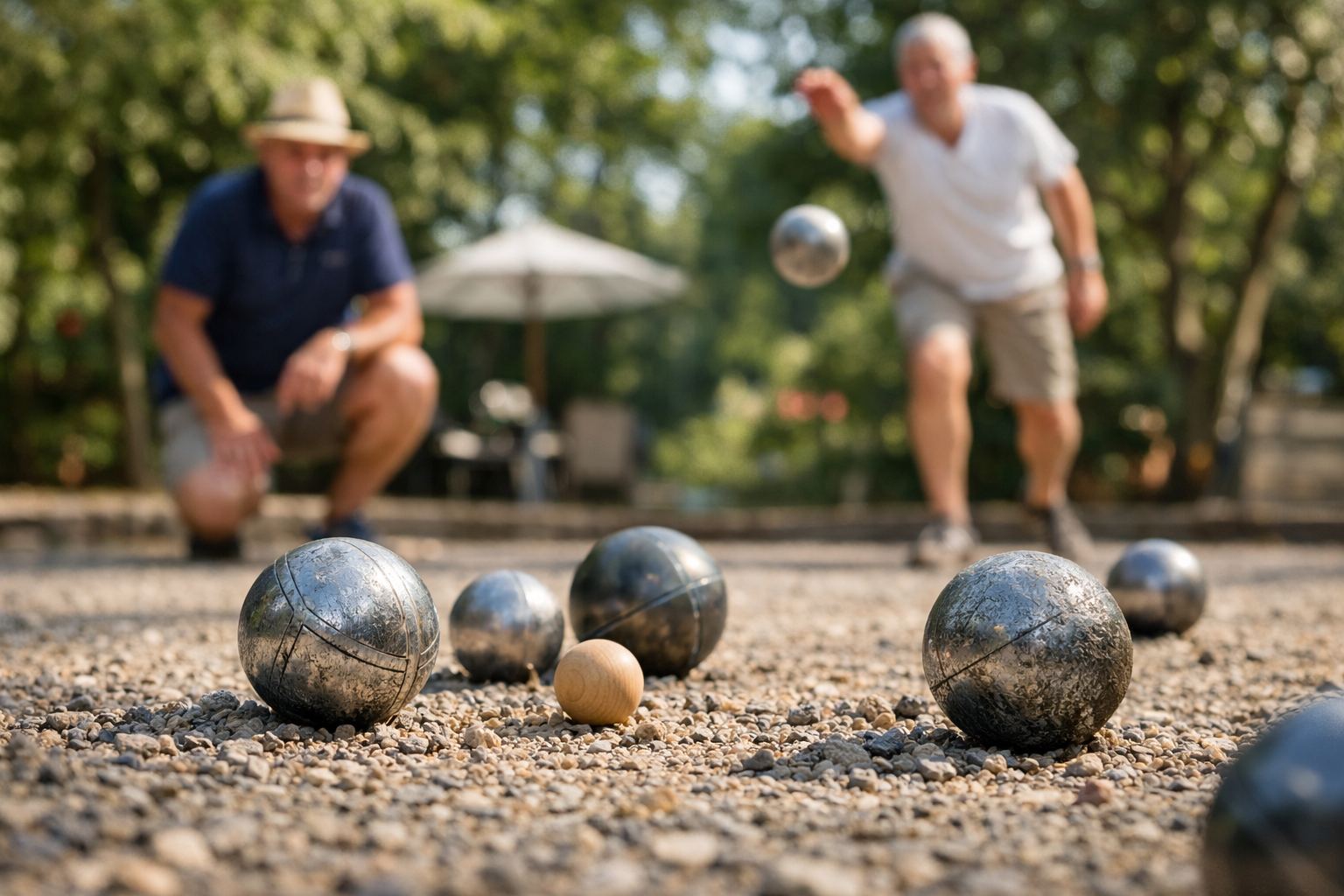
What Is Petanque?
Petanque is a target sport in which players throw hollow metal balls, called boules, as close as possible to a small wooden target ball known as the jack or cochonnet. Originating in France, the game is often played on gravel, dirt, or other firm natural surfaces, and it is valued for its straightforward rules, social atmosphere, and surprising tactical depth.
Unlike many sports that require speed, strength, or expensive equipment, petanque rewards control, concentration, and decision-making. A casual match can be enjoyed in a park, while high-level competition demands remarkable precision and mental discipline. This balance between simplicity and sophistication is one of the main reasons the sport continues to grow around the world.
The Origins and Identity of the Sport
Petanque developed in the south of France in the early 20th century, evolving from older boules games. Its name comes from the Provençal expression meaning “feet together,” a reference to the rule that players throw from a fixed circle rather than taking a running start. This distinct style made the game more accessible and helped shape its modern identity.
Over time, petanque spread far beyond France and became popular across Europe, Africa, Asia, and the Americas. Today it is played recreationally in village squares and city parks, but it also has organized federations, official championships, and dedicated clubs. The sport carries both a relaxed cultural image and a serious competitive structure.
Basic Rules of Petanque
The game is usually played in singles, doubles, or triples. In singles and doubles, each player typically uses three boules. In triples, each player generally uses two. The objective is simple: score points by finishing a round with one or more boules closer to the jack than the opposing team’s nearest boule.
A round begins when a player draws or places a throwing circle on the ground and tosses the jack to a legal distance. Players then take turns throwing boules. The team whose boule is not closest to the jack must continue throwing until it either takes the point or runs out of boules. Once both teams have thrown all their boules, points are counted.
How Scoring Works
Only one team scores in each end, or round. That team receives one point for every boule that is closer to the jack than the opponent’s nearest boule. Matches are commonly played to 13 points, though shorter or longer formats may be used depending on the setting.
Singles: one player versus one player
Doubles: two players per team
Triples: three players per team
Typical winning score: 13 points
Core Skills: Pointing and Shooting
Petanque is built around two fundamental skills: pointing and shooting. Pointing means placing a boule close to the jack, often with the right amount of roll, spin, and height to suit the terrain. A strong pointer reads the surface carefully and can adjust to hard ground, loose gravel, slopes, and uneven patches.
Shooting is the attacking side of the game. A shooter aims to knock away an opponent’s boule, change the position of the jack, or open up a difficult tactical situation. Accurate shooting can completely transform an end in a single throw. At the highest level, players are capable of hitting target boules with remarkable consistency.
The best teams combine both abilities. They know when to build pressure by pointing and when to take risks by shooting. This constant choice between defense and attack gives petanque its strategic character.
Tactics and Match Intelligence
Although petanque may look leisurely to new spectators, it is a deeply tactical sport. Every throw affects the next decision. Players must think about angle, speed, ground texture, remaining boules, scoreline, and the possible reactions of the opposing team.
Some teams prefer to place protective boules in front of the jack, forcing opponents into more difficult shots. Others attack early, trying to remove dangerous balls before the end becomes crowded. In close matches, risk management is essential. A team that is behind may choose aggressive shooting, while a team in front may prefer safer placement and control.
Common Strategic Considerations
Whether to aim directly for the point or block access to the jack
When to remove an opponent’s scoring boule
How the surface may alter bounce and roll
Whether moving the jack could create an advantage
How many boules each side still has available
Equipment and Playing Surface
One reason petanque is so approachable is that the equipment list is short. Players need a set of boules, a small jack, and a throwing circle. Competitive boules are made of metal and come in different sizes, weights, and groove patterns to match player preference. Choosing the right boule can influence comfort, grip, and throwing style.
The terrain plays a huge role in the game. Petanque is not meant for perfectly smooth surfaces. Instead, irregular ground adds complexity and personality. Stones, compact dirt, and slight slopes can all affect trajectory and final position. Experienced players quickly learn that reading the court is as important as executing the throw.
Why Petanque Appeals to So Many People
Petanque stands out because it is easy to learn but difficult to master. Beginners can start playing after only a brief explanation, yet they soon discover layers of technique and strategy. It is also inclusive. People of different ages and fitness levels can compete together, making it ideal for families, communities, and club environments.
The social side of the sport is equally important. Many players enjoy petanque for the conversation, outdoor setting, and friendly rhythm of play. At the same time, those who pursue competition find a sport that tests nerve, consistency, and teamwork under pressure.
Petanque in the Modern Sporting World
Today, petanque enjoys a strong international presence with national federations, regional leagues, and world championships. It is especially popular in countries with a deep boules tradition, but its appeal continues to expand as more people discover low-barrier sports that combine recreation with genuine skill.
Its future remains promising because petanque meets several modern sporting demands at once: it is affordable, community-friendly, tactical, and adaptable to many environments. Whether played casually on a summer afternoon or contested at elite level, petanque offers a distinctive sporting experience built on precision, patience, and intelligent play.
Conclusion
Petanque is far more than a simple throwing game. It is a sport of fine margins, clever tactics, and steady composure. With minimal equipment and broad accessibility, it welcomes newcomers while still challenging experienced competitors. That unique combination of charm and competitive depth is what keeps petanque enduringly relevant in the world of sport.