 AyRoo
AyRoo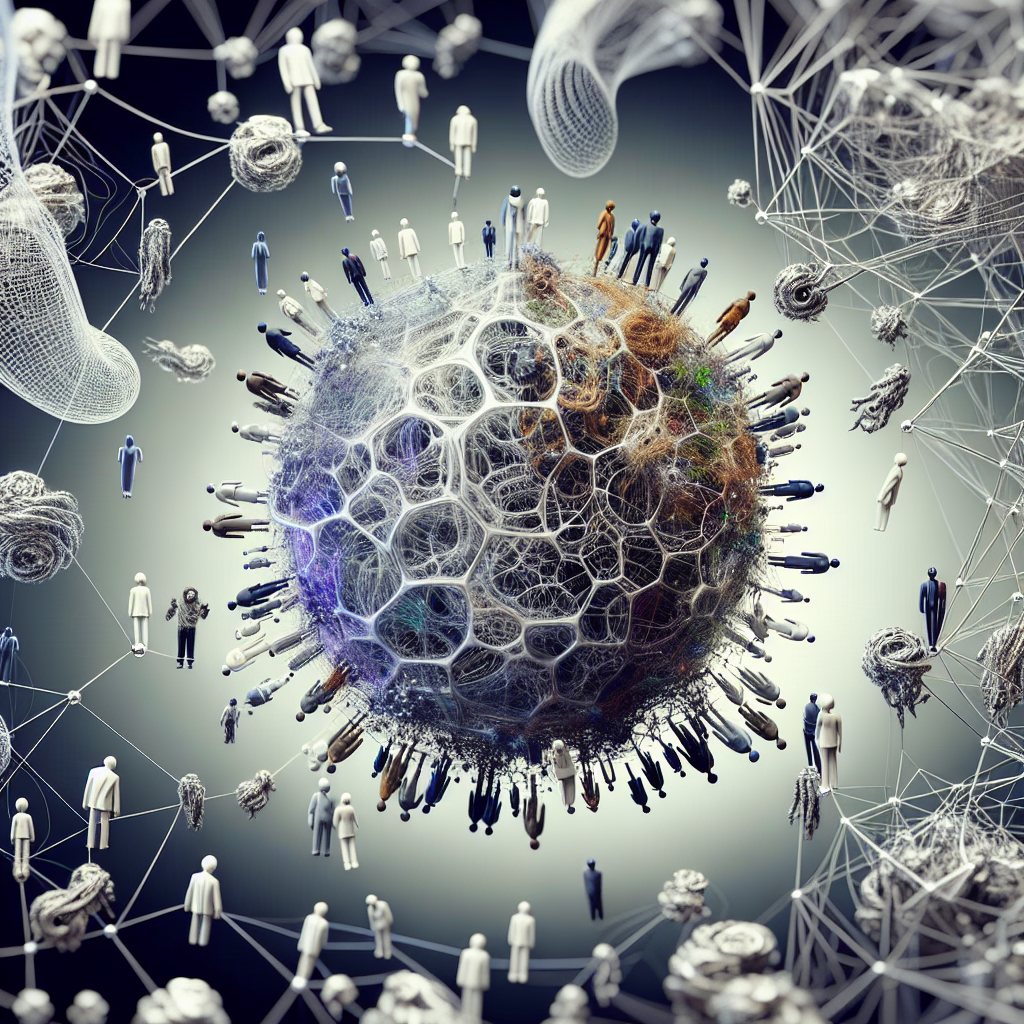
What Is Society, Really?
Society is more than a population sharing a territory. It is a living system of relationships, expectations, institutions, and shared meanings that allows people to cooperate, compete, and coexist. A society includes both visible structures—laws, schools, markets, governments—and less visible forces—norms, values, trust, identity, and culture. Together, these elements answer practical questions (How do we distribute resources? How do we resolve conflict?) and existential ones (Who are “we”? What counts as a good life?).
Because society is made of people in interaction, it constantly changes. It can be stable enough to feel permanent while shifting subtly through everyday decisions: how families raise children, what workplaces reward, what communities celebrate, and what media amplifies.
The Building Blocks: Norms, Values, and Institutions
Norms and Values: The Unwritten Architecture
Norms are shared expectations about behavior—how close to stand in conversation, whether to tip, what “respect” looks like. Values are deeper beliefs about what matters—fairness, freedom, loyalty, tradition, or innovation. Norms often flow from values, but they also evolve as circumstances change.
- Norms coordinate daily life by reducing uncertainty: people can predict how others will act.
- Values provide a moral compass, shaping what a community admires or condemns.
- Sanctions reinforce both: praise and inclusion on one end; criticism, fines, or exclusion on the other.
Institutions: The Durable Patterns
Institutions are stable systems that organize collective life—family, education, religion, the economy, healthcare, and governance. They persist because they solve recurring problems: raising and socializing children, producing goods, transmitting knowledge, and coordinating power.
Institutions can empower people by providing opportunity and protection, but they can also constrain by narrowing choices or reproducing inequality. Understanding society means looking at how institutions distribute resources, status, and risk across different groups.
Socialization: How Society Gets Inside Us
From infancy onward, people learn how to “be” in their society. This process—socialization—teaches language, emotional expression, habits, and the boundaries of acceptable behavior. Families shape early attachment and identity; peers influence belonging and style; schools teach formal knowledge and discipline; workplaces train performance and hierarchy; media offers stories about success, beauty, and danger.
Socialization is not simply obedience training. It also produces creativity and agency. People internalize rules but reinterpret them, combining inherited traditions with personal experience. This tension—between being shaped by society and shaping it in return—is a central feature of social life.
Power and Inequality: Who Gets What, and Why?
Every society allocates resources—money, education, housing, safety, political voice—and not everyone receives the same share. Inequality can be based on class, race, ethnicity, gender, disability, age, caste, religion, citizenship, or other markers of identity. Some differences reflect varied roles and skills; others reflect historical exclusion and ongoing discrimination.
Power operates through laws and force, but also through subtle channels: who is believed, whose experiences are considered “normal,” and which neighborhoods receive investment. Inequality is often maintained not by a single villain but by routines—hiring networks, school funding models, biased data, and social expectations that make outcomes appear natural even when they are not.
- Economic inequality shapes access to health, time, and opportunity.
- Political inequality affects whose preferences become policy.
- Cultural inequality influences whose language, accent, or tastes are treated as legitimate.
Social Cohesion: Trust, Belonging, and the Common Good
Societies endure when people feel some degree of mutual obligation—an expectation that others will follow basic rules, contribute, and respond in times of need. Trust is a social resource: it lowers the cost of cooperation and increases the willingness to invest in shared projects, from public transportation to disaster relief.
Belonging is equally important. Communities that foster inclusion—through fair treatment, representation, and accessible public spaces—tend to have stronger cohesion. However, cohesion can be built in unhealthy ways too, by defining an “in-group” against an “out-group.” A resilient society finds unity without demanding uniformity.
Culture and Communication: The Stories That Organize Life
Culture is the set of symbols, rituals, arts, cuisines, languages, and everyday practices that give shared life its texture. It communicates what a society remembers and what it hopes for. National holidays, local festivals, and even memes can signal values and boundaries.
Communication technologies reshape culture by changing who can speak, who can gather, and how quickly ideas spread. A rumor, a protest slogan, or a new scientific insight can travel widely in minutes. This speed can support democratic participation and cross-cultural learning, but it can also intensify polarization when people encounter only information that confirms their existing worldview.
Change and Continuity: How Societies Evolve
Societies change through gradual adaptation and sudden rupture. Economic shifts (industrialization, automation), demographic trends (migration, aging), environmental pressures (climate events), and political movements can all reconfigure institutions and norms. Social change often begins at the margins: new family forms, new identities, new artistic expressions, or new workplace expectations. Over time, what once seemed radical may become ordinary.
Yet continuity matters too. Traditions, legal frameworks, and collective memories provide stability. The challenge is balancing preservation with reform—keeping what sustains dignity and cooperation while updating what produces harm or exclusion.
What Makes a Society Flourish?
A flourishing society is not defined by perfection but by capacity: the ability to learn, to correct mistakes, and to widen the circle of security and opportunity. This includes reliable institutions, protection of rights, and avenues for participation—voting, civic groups, unions, community organizations, and open debate.
- Fair rules that apply consistently and transparently.
- Opportunity through quality education, healthcare, and mobility.
- Social safety nets that reduce catastrophic risk and support resilience.
- Pluralism that allows difference without treating it as a threat.
- Accountability so power can be questioned and corrected.
Ultimately, society is the shared project of making life livable together. It is built in parliaments and courts, but also in kitchens, classrooms, workplaces, and streets—where people negotiate rules, extend care, contest injustice, and imagine futures worth inheriting.