 AyRoo
AyRoo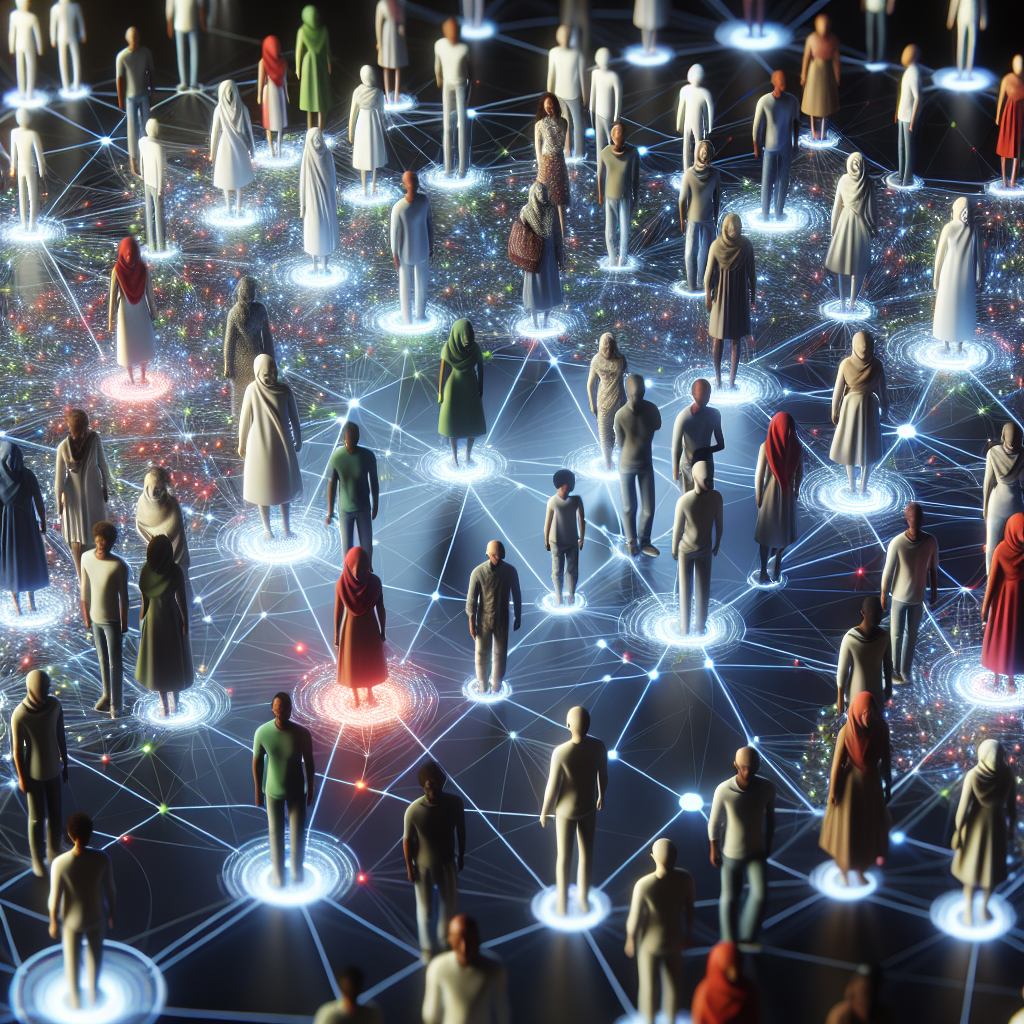
Understanding Society Beyond a Crowd
Society is more than a collection of people sharing a space. It is a living system of relationships, institutions, expectations, and shared meanings that make everyday life possible. When you stop at a red light, trust that your money will be accepted at a store, or expect a school to teach children, you are relying on social agreements that have been built over time. These agreements are rarely written in one place; they are maintained through habits, laws, culture, and mutual recognition.
At its core, society organizes human cooperation. It answers practical questions—who does what work, how resources are distributed, how conflicts are resolved—and also symbolic ones—what is valued, what is taboo, what counts as success or virtue. Because it touches both survival and meaning, society shapes not only what we do, but also what we believe we can do.
Key Building Blocks of Society
Societies vary widely across history and geography, but several components tend to appear in some form. These elements interact, sometimes smoothly and sometimes in tension, creating the distinctive character of a community.
Culture: Shared Meaning and Memory
Culture includes language, customs, stories, art, cuisine, humor, rituals, and the everyday norms that signal “how we do things here.” It is both inherited and improvised. People learn culture through families, peers, media, and institutions, but they also reinterpret it—mixing influences, challenging traditions, and introducing new forms. Culture provides a sense of identity and belonging, yet it can also be contested when groups disagree about whose values should be central.
Institutions: Durable Patterns of Organization
Institutions are the stable structures that organize social life: governments, legal systems, education, healthcare, markets, religious organizations, and more. They establish roles, set procedures, and coordinate large-scale cooperation. Institutions reduce uncertainty—helping strangers interact with predictable expectations—but they can also become rigid or unequal, especially when rules and resources favor certain groups over others.
Social Norms: The Invisible Rules
Norms are unwritten guidelines that tell people what is appropriate in a given context. Some norms promote safety and respect; others can enforce conformity or exclusion. Norms are maintained through social feedback: praise, disapproval, inclusion, ridicule, and sometimes punishment. Because norms often feel “natural” to those raised with them, they can be difficult to notice until someone breaks them—or until you encounter a different set of norms elsewhere.
Power and Stratification: Who Gets What and Why
Every society has power— the ability to influence decisions, control resources, or shape beliefs. Power can come from wealth, political authority, expertise, social status, networks, or control over information. Stratification refers to how societies rank people into layers, often along lines such as class, race, gender, caste, age, or citizenship. These layers affect access to education, health, security, and opportunity. Understanding society requires looking not only at shared cooperation, but also at the unequal distribution of risks and rewards.
How Society Shapes Individuals
People are not born knowing how to behave in a community. They learn through socialization—the process of absorbing norms, values, and roles. Families teach early habits and expectations; schools reinforce schedules, evaluation, and citizenship ideals; workplaces train professional behavior; peers shape taste and identity; media influences perceptions of status and normality.
This shaping is powerful but not absolute. Individuals interpret and sometimes resist social expectations. Someone may accept certain traditions while rejecting others, or find a community that better fits their values. Still, even resistance is often framed in social terms, using existing languages, symbols, and political tools. Society provides the stage and the script, even when people improvise.
Social Change: Why Societies Transform
Societies are dynamic. They shift through gradual evolution and sudden disruption, influenced by technology, environment, migration, economic crises, wars, social movements, and demographic change. Innovations such as printing, industrial machinery, and the internet have repeatedly altered how people work, communicate, and organize political life. Likewise, movements for labor rights, civil rights, women’s rights, and decolonization have expanded who is recognized as fully belonging within the social order.
Change often brings conflict because it rearranges power, status, and identity. When old norms lose legitimacy, people may experience uncertainty—what sociologists call anomie—where rules feel unclear and social cohesion weakens. Yet periods of upheaval can also open possibilities for more inclusive institutions and new cultural creativity.
Modern Society: Opportunities and Tensions
Contemporary societies face a mix of progress and strain. Global supply chains connect distant communities, and digital platforms allow instant communication, learning, and activism. At the same time, those same systems can produce fragility: misinformation spreads quickly, labor can become precarious, and economic shocks ripple across borders.
Many modern societies wrestle with polarization and trust—trust in institutions, in media, and in one another. Urbanization brings diversity and innovation but can also intensify inequality through housing costs and uneven access to services. Meanwhile, climate change introduces a shared global challenge that tests cooperation across nations, generations, and social classes.
What Makes a Society Healthy?
There is no perfect society, but some qualities tend to support collective well-being and resilience. A healthy society is not one without disagreement; it is one that can manage disagreement without dehumanization or violence.
- Fair and accountable institutions: Rules are applied consistently, and leaders can be questioned and replaced.
- Social trust and cohesion: People believe cooperation is possible, even across differences.
- Opportunity and mobility: Life chances are not locked by birth, identity, or neighborhood.
- Protection of rights and dignity: Minorities and vulnerable groups are safeguarded, not treated as expendable.
- Shared public goods: Education, healthcare, infrastructure, and environmental stewardship are treated as collective investments.
- Room for pluralism: Multiple ways of life can coexist under common civic principles.
Conclusion: Society as a Shared Project
Society is both the environment we inherit and the project we continuously rebuild. It lives in institutions and laws, but also in everyday choices: how we speak to strangers, what we tolerate, what we celebrate, and what we refuse to accept as normal. Understanding society means seeing the links between personal experience and larger patterns—between individual stories and collective structures. When people recognize those links, they gain not only insight, but also a measure of agency: the ability to imagine, demand, and construct a better way of living together.