 AyRoo
AyRoo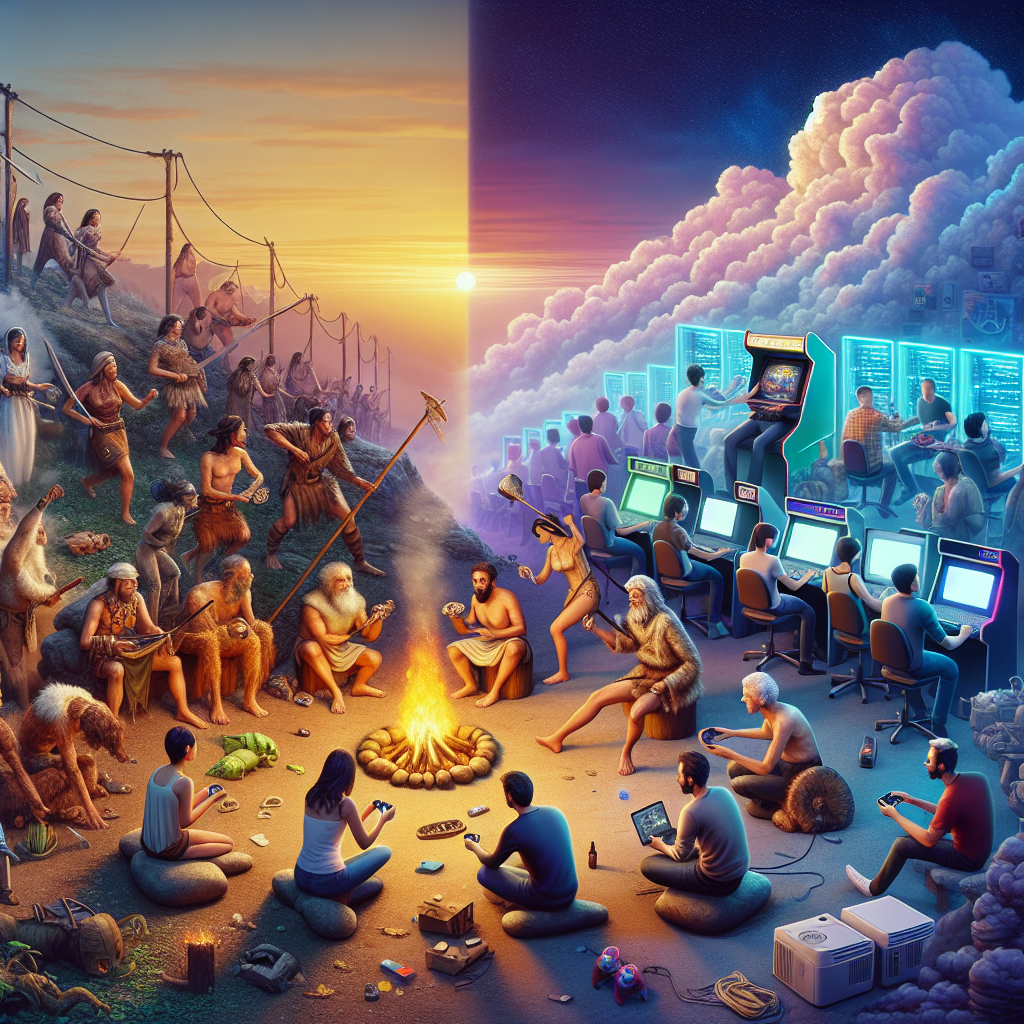
Why Games Matter Beyond “Just Fun”
Games are structured forms of play built around goals, rules, and feedback. They can be as simple as a guessing game at a campfire or as complex as a sprawling online world with millions of players. What makes games uniquely powerful is how they blend enjoyment with challenge: they invite people to test skills, explore identities, socialize, and learn—often without realizing how much cognitive and emotional work is happening along the way.
Across cultures and centuries, games have acted as social glue and mental training grounds. They teach cooperation and competition, reward persistence, and offer safe spaces to experiment with strategy, risk, and creativity. In modern life, games have also become a major cultural industry, shaping art, storytelling, technology, and even education.
Core Elements of a Game
While games come in countless styles, most share a set of building blocks. Understanding these elements helps explain why some games feel compelling and others fall flat.
- Rules: Constraints that define what players can and cannot do. Rules create meaning by making choices matter.
- Goals: A clear objective, such as winning a match, solving a puzzle, or surviving a challenge.
- Feedback: Information that tells players how they’re doing—scores, health bars, progress markers, or narrative outcomes.
- Challenge: Obstacles that require effort to overcome. The best games balance difficulty to keep players engaged.
- Agency: The sense that player decisions influence outcomes, whether through tactics, story choices, or creative building.
- Voluntary participation: Players choose to enter the “magic circle,” accepting rules for the sake of the experience.
A Brief Tour of Game Types
“Games” is a broad umbrella. Different formats emphasize different pleasures—strategy, narrative, reflexes, creativity, or social interaction.
Tabletop and Card Games
Board games, tabletop role-playing games (TTRPGs), and card games rely on face-to-face interaction and shared imagination. Modern tabletop design has evolved rapidly, with streamlined rules, cooperative play, and storytelling-driven experiences that welcome new players. TTRPGs add a unique layer: players collaborate to create a story, often guided by a game master and shaped by dice-driven uncertainty.
Video Games
Video games range from quick mobile puzzles to cinematic adventures and competitive esports. Digital games can simulate physics, support massive online communities, and deliver dynamic storytelling. They also enable rapid iteration: updates, downloadable content, and seasonal events can reshape the experience long after release.
Sports and Physical Games
Sports and playground games add athletic skill, endurance, and teamwork. Their rules often evolve through tradition and local culture. Physical games also highlight a key quality of play: the body learns alongside the mind, building coordination and resilience.
Social and Party Games
Party games prioritize laughter and connection. They often use simple rules, short rounds, and improvisation to keep the energy high. This category includes word games, bluffing games, and many digital “couch co-op” experiences designed for groups.
How Games Engage the Brain
Games are experts at motivation. They provide clear goals, immediate feedback, and a progression arc that makes effort feel rewarding. When a game is well-tuned, players enter a state of deep focus often described as “flow,” where challenge matches ability and time seems to move differently.
Games can strengthen a variety of mental skills depending on the genre:
- Strategic thinking: Planning ahead, managing resources, and adapting to opponents.
- Problem-solving: Recognizing patterns, testing hypotheses, and learning from failure.
- Attention control: Tracking multiple goals, filtering distractions, and reacting quickly.
- Social reasoning: Reading intentions, negotiating roles, and communicating under pressure.
Importantly, games also normalize productive failure. Losing a match or missing a jump is not the end—it’s feedback. This can build persistence and a growth mindset when players are supported and the challenge is fair.
Games as Culture and Storytelling
Games are not just systems; they are cultural artifacts. Art direction, music, dialogue, and world-building create mood and meaning. Interactive storytelling adds a special twist: players do not merely witness a narrative—they participate in it. Even in games without a traditional plot, stories emerge through play: an unexpected comeback, a risky bargain, or a cooperative rescue becomes a memorable narrative shared afterward.
Online communities extend this cultural life. Fans create guides, mods, tournaments, fan art, and entire subcultures around favorite titles. In many cases, the community becomes part of the game itself, shaping how it is played and understood.
Healthy Play: Benefits and Boundaries
Games can support well-being by offering relaxation, social connection, and a sense of achievement. Cooperative games can strengthen friendships and family bonds, while single-player games can provide quiet focus and creative escape. Serious games and gamified tools are also used in training, rehabilitation, and education.
At the same time, healthy play benefits from intentional boundaries. Because games are designed to be engaging, it helps to approach them with awareness.
- Choose games that match your goal: Calm puzzle games feel different from competitive ranked modes.
- Watch for fatigue signals: Irritability and declining enjoyment can indicate it’s time for a break.
- Balance time and priorities: Treat play as a nourishing part of life, not a replacement for sleep or responsibilities.
- Play socially with care: In online spaces, curate communities and use moderation tools when needed.
Where Games Are Headed Next
The future of games is being shaped by new technologies and changing player expectations. Cloud gaming and cross-platform play are reducing hardware barriers and connecting wider communities. Advances in accessibility are expanding who can play through customizable controls, readable interfaces, and thoughtful difficulty options. Meanwhile, tools for creation—level editors, mod kits, and user-generated content platforms—are turning more players into designers.
Games will continue to evolve as an art form and a social space. Whether played on a board, a field, or a screen, they remain one of humanity’s most versatile inventions: a way to practice skills, share stories, and experience the joy of meaningful challenge.