 AyRoo
AyRoo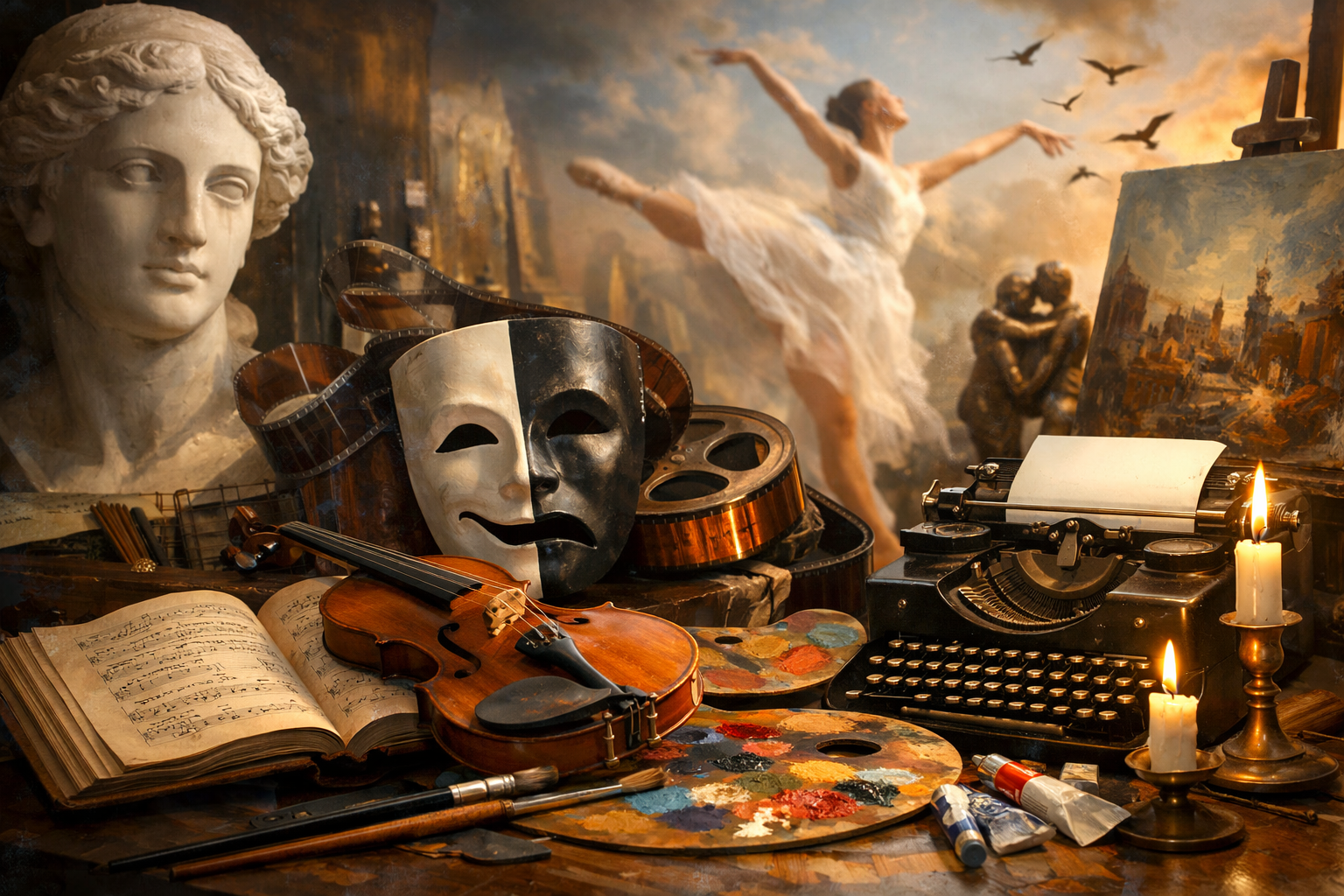
What We Mean When We Say “The Arts”
The arts refer to a broad family of creative practices that use skill, imagination, and aesthetics to communicate ideas and emotions. They include visual arts (painting, sculpture, photography, design), performing arts (theater, dance, music), literary arts (poetry, fiction, essays), media arts (film, animation, games), and applied arts (architecture, fashion, craft). While each discipline has its own tools and traditions, they share a core purpose: to shape perception and invite interpretation.
Unlike purely informational communication, art often thrives on ambiguity. A song can express grief without naming it; a mural can make a neighborhood feel seen; a novel can explore moral complexity without providing a final verdict. In this way, the arts function as a living language—one that changes across time, place, and community.
Major Forms of Art and What They Offer
Visual Arts: Seeing Differently
Visual arts translate experience into form, color, texture, scale, and composition. A photograph can freeze a decisive moment; a sculpture can make weight and balance feel emotionally charged; graphic design can shape how information is trusted or ignored. Visual art trains attention: it asks viewers to notice relationships between elements and to reflect on what is emphasized, hidden, or distorted.
Performing Arts: Time, Presence, and Shared Breath
Theater, dance, and live music unfold in time and depend on presence—both of performers and audiences. A performance can be identical on paper yet radically different in feeling based on tempo, energy, space, and context. Performing arts are also inherently social: audiences laugh, gasp, and fall silent together, creating a temporary community that can heighten empathy and collective reflection.
Literary Arts: Inner Worlds in Words
Literature turns language into a tool for inhabiting other minds. Poems compress meaning and sound into concentrated form; novels build long arcs of character and consequence; essays clarify and challenge ideas. Reading is often solitary, yet it is one of the strongest bridges across difference—inviting readers to experience unfamiliar lives and viewpoints with emotional nuance.
Media and Digital Arts: New Tools, New Questions
Film, animation, interactive installations, and video games combine multiple art forms: image, sound, narrative, and design. Digital tools expand what’s possible—real-time rendering, virtual spaces, algorithmic composition—but also introduce new questions about authorship, ownership, and authenticity. In an era of rapid distribution, media arts can travel globally within hours, influencing trends and debates at unprecedented speed.
Applied Arts and Craft: Beauty with Function
Architecture, fashion, industrial design, ceramics, and other crafts prove that usefulness and beauty are not opposites. The curve of a chair, the layout of a public plaza, or the pattern on a woven textile can express identity and values. Craft traditions also preserve knowledge through hands-on practice, linking generations through technique and material.
Why the Arts Matter Beyond Entertainment
The Arts Preserve Memory and History
Artworks are cultural records. They document styles, beliefs, conflicts, celebrations, and everyday life—sometimes more candidly than official histories. Songs carry the voice of movements; monuments reveal what societies choose to honor; contemporary street art can capture the urgency of a moment before institutions respond. Even when art is fictional, it can be historically truthful about how an era felt.
The Arts Build Empathy and Emotional Literacy
Engaging with art strengthens the ability to recognize emotion, tolerate ambiguity, and consider multiple interpretations. A play can expose the human cost of policy; a painting can evoke tenderness without words; a novel can complicate stereotypes by giving characters full interiority. This does not automatically produce agreement, but it can produce understanding—an essential ingredient for coexistence.
The Arts Strengthen Communities
Festivals, galleries, open mic nights, public murals, and local theater bring people together across age and background. Community arts projects can revitalize public spaces and create shared pride. Importantly, the arts also provide a platform for voices that might otherwise be overlooked, helping communities tell their own stories rather than having them told from the outside.
The Arts Drive Innovation and Economies
Creative industries generate jobs and stimulate tourism, publishing, entertainment, design, and technology. Beyond direct economic value, arts thinking—experimenting, iterating, embracing failure, and refining taste—supports innovation in other fields. Many breakthroughs in product design, advertising, and user experience come from artistic methods applied to practical problems.
How Art Works: Elements, Interpretation, and Context
Art is created through choices: medium, rhythm, tone, color, perspective, structure, and symbolism. These choices form an internal logic that viewers or listeners learn to read. Yet interpretation is never only about the object; it is also about context. Where the work is shown, who made it, who is allowed to participate, and what cultural references it draws upon all shape meaning.
This is why the same artwork can inspire admiration in one setting and controversy in another. Art is not just a product; it is a relationship between creator, audience, and environment—constantly renegotiated as cultures change.
Ways to Engage with the Arts in Everyday Life
You don’t need specialized training to participate meaningfully. Curiosity and attention are enough. Consider these practical ways to build a richer relationship with the arts:
- Practice “slow looking” or “deep listening”: spend five focused minutes with a single artwork or track and notice details that emerge over time.
- Follow a local arts calendar: small venues and community showcases often offer the most direct connection to living culture.
- Try making something regularly: sketching, journaling, photography, or learning an instrument strengthens creative confidence.
- Explore unfamiliar genres: watch a foreign film, attend a contemporary dance performance, or read poetry from a different era.
- Talk about art with others: sharing interpretations reveals how differently people perceive the same work.
The Future of the Arts: Access, Technology, and Responsibility
The arts are expanding through digital platforms, new materials, and hybrid formats. Online distribution can make art more accessible, but it can also compress complex work into short attention cycles. As technology evolves, creators and audiences will continue to negotiate questions of fair compensation, cultural appropriation versus exchange, and the ethical use of tools such as generative systems.
What remains constant is the human impulse behind the arts: to make meaning, to connect, and to leave traces of our inner lives. In every era, the arts help societies imagine what could be different—and remind individuals that their experiences can be expressed, shared, and transformed.