 AyRoo
AyRoo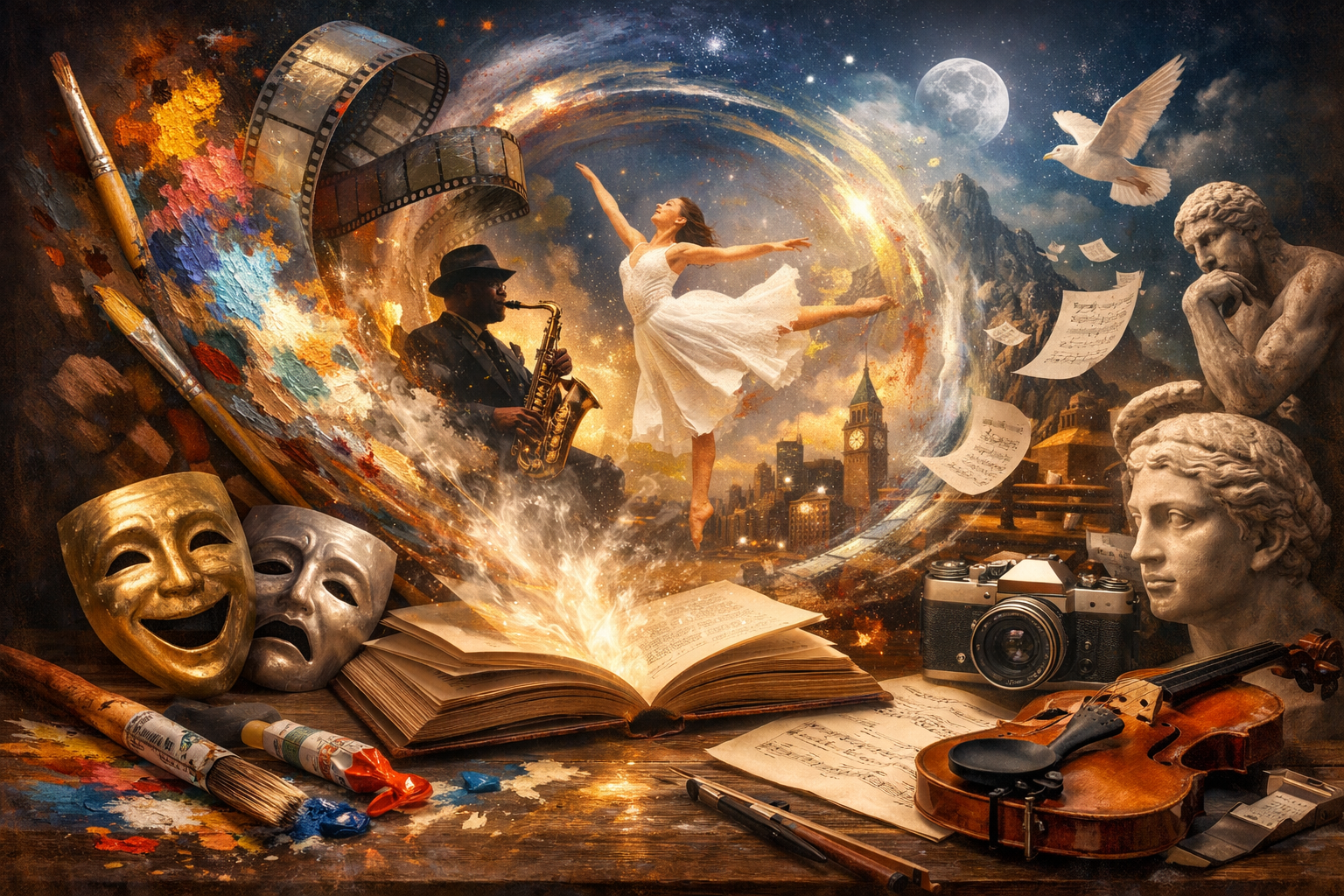
Understanding the Arts: More Than “Beautiful Things”
The term arts describes a wide range of human practices that turn perception, emotion, and ideas into shared experience. Painting, dance, theater, film, music, literature, architecture, digital media, and craft traditions all belong under this umbrella. What unites them is not a single style or technique, but an intention: to communicate, question, celebrate, or transform how we see the world.
Unlike purely informational messages, artistic expression often carries multiple meanings at once. A song can be comforting and political; a photograph can be documentary and symbolic; a building can be functional and poetic. This layered quality is why the arts endure across time—each generation can reinterpret the same work through its own needs and values.
Major Domains of Artistic Practice
Visual Arts
Visual arts include painting, drawing, sculpture, printmaking, photography, and installation. They operate through color, form, texture, space, and light. Visual artists frequently explore perspective—both literal and cultural—asking viewers to notice what is normally overlooked. Contemporary visual art also embraces found materials and site-specific work, where meaning depends on context as much as on the object itself.
Performing Arts
Dance, theater, and live music create meaning through time, movement, voice, and presence. A performance is not only the scripted content; it is the relationship between performer and audience in a specific place. This immediacy can make the performing arts especially powerful for community storytelling, ritual, and social commentary.
Literary Arts
Poetry, fiction, drama, and creative nonfiction shape language into pattern, character, and narrative. The literary arts train attention: to rhythm, to nuance, to the unspoken. They also expand empathy by letting readers inhabit another person’s interior world—sometimes someone distant in culture, era, or experience.
Design, Architecture, and Applied Arts
Design and architecture sit at the intersection of creativity and practical need. A chair, a poster, a city park, or a public transit map can be judged not only by aesthetics but by usability, sustainability, and social impact. The applied arts—ceramics, textiles, jewelry, woodworking—show that artistry is not separate from everyday life; it can be embedded in the objects we touch and depend on.
Digital and Media Arts
Film, animation, video art, game design, and interactive installations use technology as both tool and subject. Digital arts have expanded who can produce and distribute work, while also raising fresh questions about authorship, authenticity, and attention in an era of constant content.
Why the Arts Matter in Society
The arts play several roles at once, often in tension with each other. They can preserve tradition and disrupt it; they can comfort and confront. At their best, they create public space for complexity—where difficult emotions and contested histories can be acknowledged rather than simplified.
- Cultural memory: Art carries stories forward—family histories, community rituals, national narratives, and counter-narratives that challenge official accounts.
- Identity and belonging: Styles, symbols, and performances help people express who they are and where they come from, including hybrid identities formed through migration and exchange.
- Civic dialogue: Theater, murals, documentary film, and protest music can make social issues visible and discussable, especially for audiences who feel excluded from formal politics.
- Emotional processing: Creating or engaging with art can help people articulate grief, joy, anger, or hope when ordinary speech falls short.
- Economic and educational value: Creative industries support jobs, while arts education strengthens observation, collaboration, and inventive problem-solving—skills that transfer widely.
How Artistic Meaning Is Made
Meaning in art is not only “put in” by the artist; it is also “brought out” by the viewer, reader, or listener. Context matters: the time period, the medium, the venue, and the audience’s own experiences. A single image can read differently in a museum than on a phone screen; a folk song can change when performed in a concert hall rather than at a family gathering.
Three elements often interact to shape interpretation:
- Form: The structure—composition, rhythm, pacing, materials, and technique.
- Content: The subject—characters, themes, symbols, and references.
- Context: The circumstances—history, politics, community, and purpose.
Engaging With the Arts More Deeply
You don’t need specialized training to enjoy art, but a few habits can make the experience richer. First, slow down: many works reveal themselves over time. Second, ask simple questions—then follow where the answers lead.
- Look or listen for patterns: Repeated shapes, motifs, chords, or phrases often signal the work’s emotional center.
- Notice your reaction: Confusion, delight, resistance, or boredom can all be useful clues.
- Separate preference from observation: You can recognize craft and intention even if the style isn’t “your taste.”
- Learn a little context: A short artist statement, a historical note, or a conversation with others can open new layers.
- Support local culture: Community theaters, galleries, libraries, and festivals are where art stays connected to everyday life.
The Arts in the Future: Tradition, Technology, and Responsibility
The future of the arts will be shaped by both opportunity and constraint. Technology enables new forms—immersive installations, real-time collaboration across continents, and tools that accelerate experimentation. At the same time, artists and audiences face pressing questions: Who gets credited and compensated? How do we preserve digital work? What happens when attention becomes the most valuable currency?
Environmental pressures also influence artistic practice, encouraging sustainable materials, re-use, and work that addresses ecological realities. Meanwhile, long-standing debates about access and representation continue to push institutions to broaden whose stories are collected, funded, taught, and celebrated.
Across all these changes, the core function remains: the arts help people make meaning together. They are a living language—spoken in images, gestures, sounds, and spaces—through which communities remember, argue, heal, and imagine what comes next.