 AyRoo
AyRoo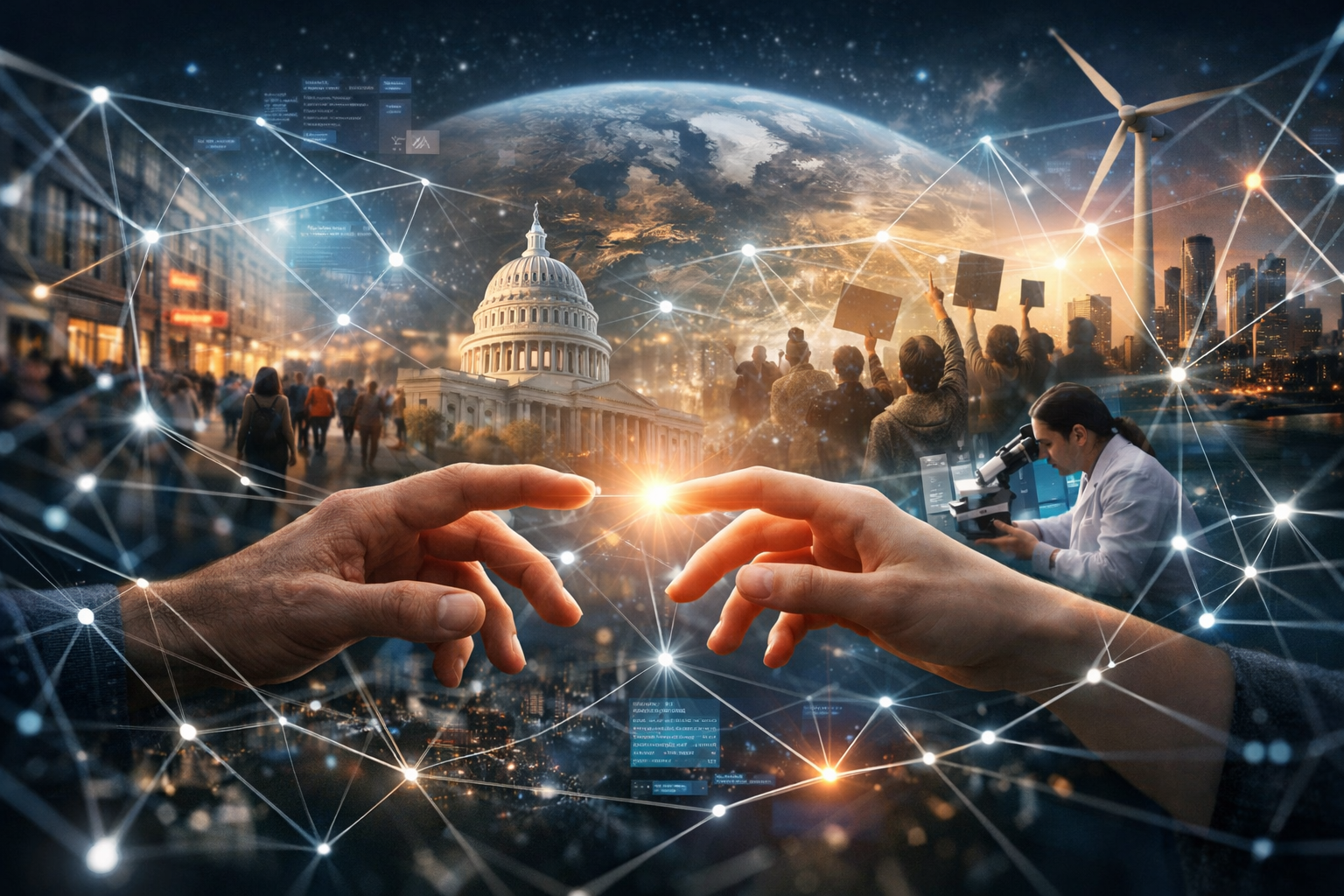
What Society Is (and Isn’t)
Society is the organized pattern of human relationships and shared life that emerges when people live together over time. It includes the norms we follow, the institutions we rely on, the values we argue about, and the networks we build—family, neighborhoods, workplaces, online communities, and nations. Society is not simply “a crowd” or “a country.” A society can be as small as a remote island community or as vast as a modern nation-state linked by laws, markets, media, and culture.
At its core, society answers practical questions: How do we cooperate? Who gets what? What counts as fair? How do we handle conflict? The specific answers differ widely, but the underlying need to coordinate behavior is universal.
The Building Blocks of Social Life
Shared Norms and Values
Norms are the informal rules of everyday life—how close to stand, when to speak, what is considered polite or rude. Values are deeper beliefs about what matters, such as freedom, equality, tradition, or security. Together, norms and values create expectations that make life predictable. When expectations break down, people experience uncertainty and conflict, and societies often respond by reinforcing boundaries or renegotiating them.
Roles, Status, and Identity
People occupy roles (student, parent, manager, citizen) that come with responsibilities and privileges. Status refers to the social position we hold, which can be ascribed (assigned at birth, such as age or family background) or achieved (earned through effort, such as education or occupation). Identity forms at the intersection of personal experience and social recognition. In other words, who we think we are is shaped partly by how others treat us and what opportunities we can realistically access.
Institutions That Organize Collective Life
Institutions are durable systems that structure behavior. They are not only buildings or bureaucracies; they are patterns of rules and practices. Major institutions include:
- Family: socialization, care, and intergenerational support.
- Education: skill development, cultural transmission, and credentialing.
- Economy: production, distribution, and the organization of labor.
- Government and law: decision-making, rights, enforcement, and dispute resolution.
- Religion and belief systems: meaning-making, moral guidance, and community.
- Media and technology: information flows, cultural narratives, and social connection.
How Social Order Is Maintained
Societies persist because they balance cooperation with control. Social order is maintained through a combination of internal and external pressures:
- Socialization: from childhood onward, people learn language, norms, and acceptable behavior through family, peers, schools, and media.
- Informal sanctions: approval, shame, praise, gossip, and exclusion encourage conformity without legal action.
- Formal sanctions: laws, courts, fines, and imprisonment set boundaries for behavior that threatens public safety or stability.
Importantly, order is not always synonymous with justice. A society can be stable while still producing inequality or excluding certain groups. Understanding society requires asking not only “How does it function?” but also “Who benefits from the way it functions?”
Power, Inequality, and Social Stratification
Every society distributes resources—money, education, healthcare, political influence, and social respect—unevenly. Social stratification refers to these layered inequalities, often shaped by class, race and ethnicity, gender, disability, and immigration status. Power operates through institutions (who can vote, who gets hired, whose neighborhoods receive investment) and through culture (whose voices are seen as credible, whose traditions are treated as “normal”).
Inequality is not just an economic issue; it affects health outcomes, life expectancy, safety, and the ability to plan for the future. When disparities become too large or appear illegitimate, trust erodes and social conflict intensifies. In response, societies may pursue reforms, strengthen social protections, or, in some cases, deepen divisions.
Social Change: Why Societies Transform
Society is not static. It evolves through both gradual shifts and sudden disruptions. Common drivers of social change include:
- Technological innovation: from printing presses to social media, new tools reshape communication, work, and politics.
- Economic transitions: industrialization, globalization, and automation alter jobs, migration patterns, and class structures.
- Demographic change: aging populations, urbanization, and shifting family patterns transform needs and values.
- Social movements: organized efforts—civil rights, labor, feminist, environmental—push institutions to expand rights or redistribute power.
- Crisis and conflict: wars, pandemics, and natural disasters can accelerate change by exposing weaknesses and forcing adaptation.
Not all change is progress, and progress is rarely linear. Gains in rights can be followed by backlash; increased connectivity can coexist with misinformation. The direction of change often depends on how effectively people coordinate, persuade, and build institutions that endure.
The Individual and Society: A Two-Way Relationship
Society shapes individual behavior through opportunity and constraint: where you can live, what work is available, what education you can afford, and what identities are socially rewarded. At the same time, individuals and small groups influence society through everyday choices—what they buy, how they speak, what they tolerate, and what they challenge. Culture is continually reproduced in mundane interactions: raising children, collaborating with colleagues, participating in rituals, or sharing ideas online.
This two-way relationship is why social issues feel personal. Debates about schooling, policing, healthcare, or speech are never only about policies; they are about competing visions of what a good life looks like and who is responsible for making it possible.
Society in the Digital Age
Digital platforms have expanded the scale and speed of social interaction. Communities form across geography, but they can also fragment into echo chambers. Information can empower citizens, yet algorithmic incentives may reward outrage, intensify polarization, and spread falsehoods. Meanwhile, data collection raises questions about surveillance, privacy, and the balance between security and liberty.
Understanding society today requires digital literacy: knowing how information is produced, amplified, and monetized, and how online behavior connects to offline outcomes—elections, public health, reputations, and mental well-being.
Why the Concept of Society Still Matters
Society is the lens that connects private experiences to public patterns. It helps explain why similar problems appear across many lives—why housing becomes unaffordable, why certain groups face consistent barriers, why norms shift, and why trust rises or falls. Thinking sociologically does not remove personal responsibility, but it clarifies the contexts in which responsibility can be exercised.
Ultimately, society is a living web: fragile in places, resilient in others, and constantly rewoven by human decisions. When people understand how the web is made—through norms, institutions, power, and change—they are better equipped to repair it, strengthen it, and imagine new patterns worth building together.