 AyRoo
AyRoo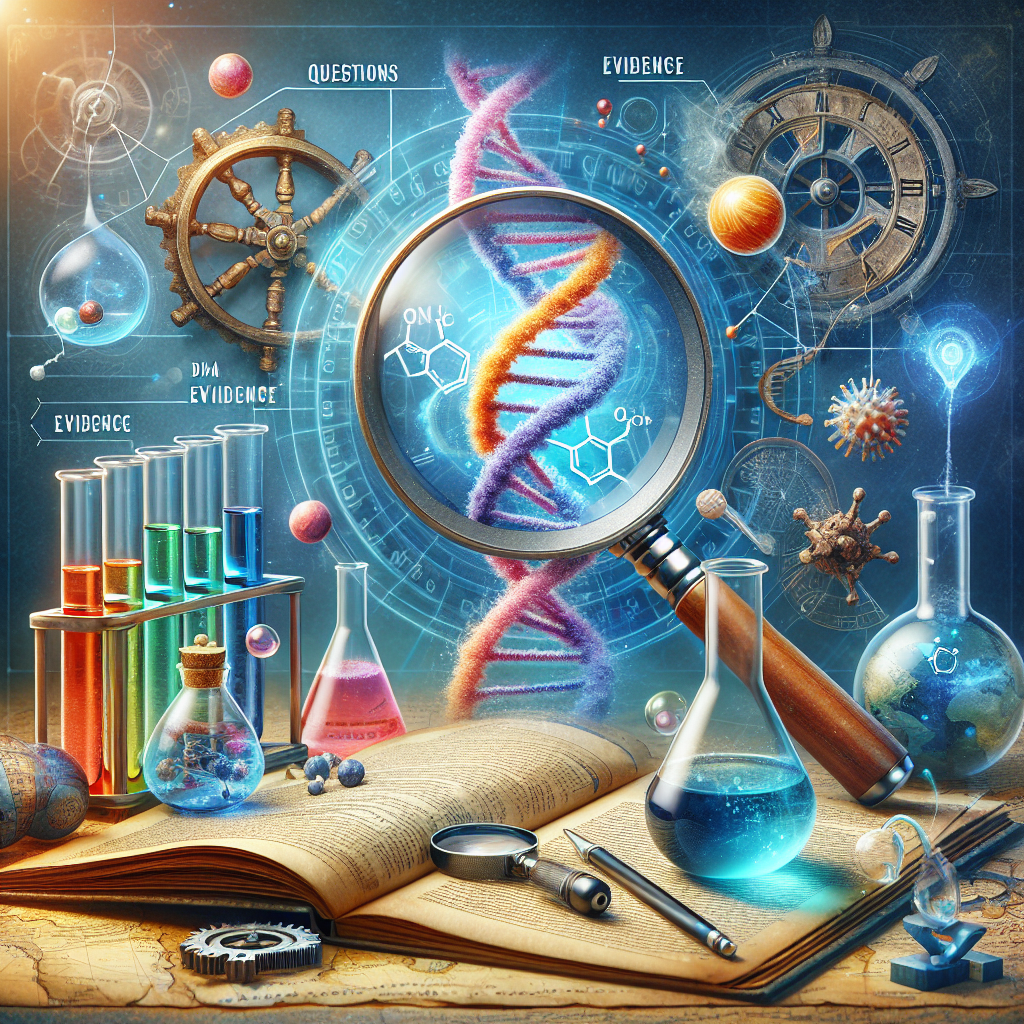
What Science Really Is
Science is a disciplined way of learning about reality by asking clear questions, gathering evidence, and building explanations that can be tested. It is not a single set of facts, and it is not defined by lab coats or advanced equipment. At its core, science is a method for reducing uncertainty: it helps us move from “I think” to “we have reasons to believe,” based on observations that others can check.
Unlike many other forms of knowledge, scientific claims are expected to be provisional. A good scientific explanation is strong not because it is unchangeable, but because it remains reliable under scrutiny and improves when new information arrives. This self-correcting character is one of science’s greatest strengths.
How Scientific Knowledge Is Built
Scientific understanding grows through a cycle of questioning, testing, and refinement. While different fields use different tools—from telescopes to surveys—the underlying logic is similar: define a problem, propose an explanation, and evaluate it against evidence. Good science is careful about bias, measurement error, and alternative explanations.
Observation and Curiosity
Many scientific journeys begin with noticing a pattern or anomaly: why do some materials conduct electricity and others do not? Why do certain diseases spread faster in specific conditions? Observations can be qualitative (descriptive) or quantitative (measured), but in both cases they motivate questions that can be investigated.
Hypotheses, Models, and Predictions
A hypothesis is a proposed explanation that can be tested. A model is a simplified representation of a system—mathematical, conceptual, or computational—that helps scientists understand complex relationships. What gives these ideas power is prediction: if the explanation is correct, we should observe a specific outcome under specific conditions.
Experiments and Evidence
When possible, scientists run controlled experiments to isolate cause and effect. In other cases—such as astronomy or geology—controlled experiments may be impossible, so researchers rely on observational evidence, natural experiments, simulations, and comparative analysis. Evidence becomes more persuasive when it is precise, repeatable, and converges from multiple independent approaches.
Peer Review, Replication, and Debate
Science is social. Researchers share methods and results so that others can critique them, attempt replication, and test alternative interpretations. Peer review is a quality filter, not a guarantee of truth; replication and continued scrutiny are what ultimately stabilize findings. Debate is not a flaw in science—it is one of the mechanisms that keeps conclusions honest.
The Branches of Science and What They Study
Science is often grouped into broad domains, each with its own methods and traditions. The boundaries are porous: modern breakthroughs frequently happen where fields overlap.
- Physical sciences (physics, chemistry) explore matter, energy, forces, and the interactions that shape everything from atoms to galaxies.
- Life sciences (biology, genetics, ecology) investigate living systems, from molecules and cells to ecosystems and evolution.
- Earth and space sciences (geology, meteorology, astronomy) examine our planet’s processes and the wider universe beyond it.
- Social and behavioral sciences (psychology, sociology, economics) study human behavior and societies, often combining experiments, statistics, and real-world data.
- Applied sciences and engineering translate understanding into technologies, medicines, materials, and systems that solve practical problems.
Why Science Matters in Everyday Life
Science influences daily decisions in ways that can be invisible until something goes wrong. Clean water depends on chemistry and microbiology. Weather forecasts rely on physics and computational modeling. Medical treatments emerge from biology, clinical trials, and careful risk assessment. Even common conveniences—GPS navigation, smartphones, refrigeration—are built on centuries of accumulated scientific insight.
Beyond technologies, science provides a framework for evaluating claims. In a world filled with advertising, misinformation, and persuasive narratives, scientific thinking helps people ask: What is the evidence? How was it measured? Could there be another explanation? What would change my mind?
Common Misconceptions About Science
Misunderstanding science can lead to misplaced skepticism or unrealistic expectations. Clearing up a few persistent myths makes it easier to interpret scientific news and public debates.
- “Science proves things.” Science rarely offers absolute proof; it offers strong or weak support based on evidence, uncertainty, and repeated testing.
- “A single study settles the issue.” Reliable conclusions come from multiple studies, converging evidence, and continual re-evaluation.
- “If scientists disagree, nothing is known.” Disagreement often concerns details, mechanisms, or estimates—not the entire phenomenon.
- “Science is just another opinion.” Scientific claims are accountable to data, methods, and replication in ways that personal opinions are not.
Ethics, Responsibility, and the Human Side of Science
Science is conducted by people, and people bring incentives, limitations, and values. Ethical science requires honesty in reporting results, respect for research subjects, careful handling of data, and transparency about conflicts of interest. Responsible science also considers downstream impacts: how a technology might affect privacy, inequality, the environment, or public health.
History shows both inspiring achievements and serious harms when research is conducted without adequate safeguards. Modern ethical frameworks—such as informed consent in medical research, animal welfare standards, and data integrity practices—exist to protect individuals and communities and to maintain trust.
The Future of Science: Bigger Data, Broader Participation
Science is entering an era shaped by high-throughput instruments, global collaboration, and powerful computation. Artificial intelligence can detect patterns in enormous datasets, but it also raises questions about transparency, bias, and interpretability. At the same time, citizen science and open-access publishing are expanding who can contribute to discovery and who can benefit from it.
Many of the most urgent challenges—climate resilience, emerging diseases, sustainable energy, food security—are interdisciplinary. Solving them demands not only technical expertise, but also communication, policy insight, and public engagement.
Conclusion: A Method for Making Better Maps of Reality
Science is best understood as a practical tool for building better maps of how the world works. Its conclusions are never final, yet they can be remarkably dependable because they are tested, contested, and refined. Whether you are evaluating a health claim, voting on a policy, or simply wondering how something works, scientific thinking offers a way to replace guesswork with evidence—and to turn curiosity into knowledge.